August 27, 2026/
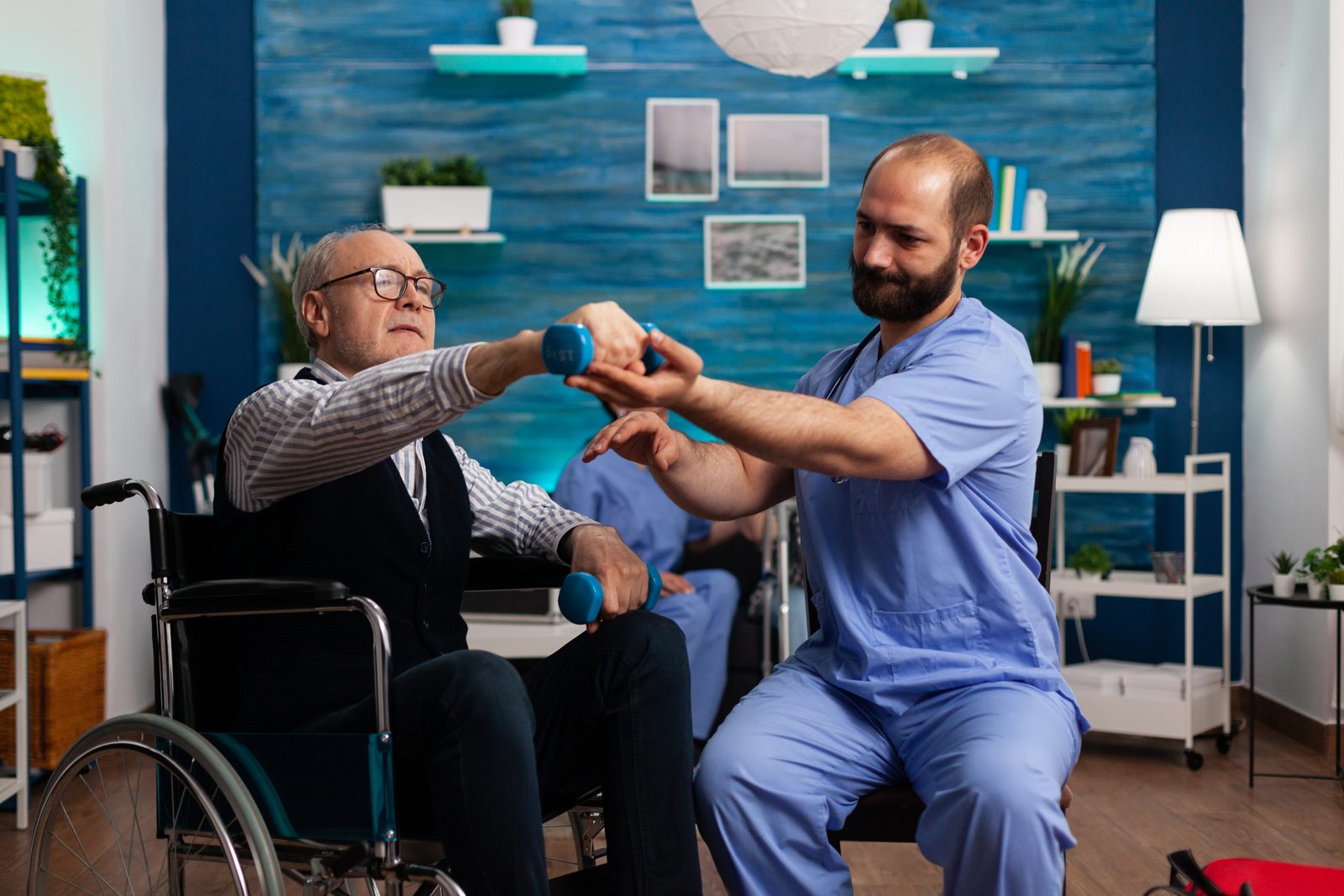
The Role of Magnetic Stimulation in Stroke Rehabilitation: When It...

In the field of neurorehabilitation, traditional experience alone is not enough.
A stroke patient, or someone with a nerve injury, difficulty walking, or muscle tension, does not only need repeated physical therapy sessions, but a specialist medical view that understands how the nervous system works, and how it can be helped to regain as much movement, function and independence as possible.
From here the name of Dr. Shereen Fawaz emerged as one of the leading names in neurorehabilitation and non-invasive neuromodulation in Egypt.
According to her professional record and specialized experience, Dr. Shereen Fawaz is the first to introduce the magnetic stimulation device in Egypt, opening a new door to the use of modern techniques in rehabilitating stroke patients, nerve injuries, movement disorders, and walking and balance difficulties.
But more important than introducing the device is the way it is used.
At Dr. Shereen Fawaz’s clinic, magnetic stimulation is not treated as a separate device or a quick fix, but as part of an integrated medical system that begins with assessment, then choosing the suitable patient, then setting a neurorehabilitation plan tailored to each patient’s condition.
Dr. Shereen Fawaz specializes in physical medicine, rheumatology and rehabilitation, holds a doctorate from Ain Shams University, is a Fellow/Examiner of the Royal College of Physicians (UK), and has long experience handling neurological and motor rehabilitation cases, especially complex cases that need a careful assessment and a specialized treatment program.
Her expertise is distinguished by combining physical medicine, neurorehabilitation, motor rehabilitation, treatment of movement disorders, and non-invasive neurostimulation and neuromodulation techniques.
This is what makes her role different in neurorehabilitation in Egypt; she was not content with offering traditional physical therapy, but contributed to introducing and developing a more advanced direction that relies on understanding the nervous system itself, rather than dealing with the muscles only.
Magnetic stimulation of the brain, or TMS, is a non-invasive technique that uses focused magnetic pulses to stimulate certain areas of the nervous system.
The idea, simply, is that in some neurological conditions the problem is not in the muscles alone, but in the way the brain communicates with the nerves and muscles.
After a stroke, for example, the patient may suffer weakness in the hand or foot, difficulty walking, poor balance, or slow recovery of movement. In these cases, the patient needs a neurorehabilitation program that helps the nervous system reorganize its functions as far as possible.
Magnetic stimulation may enter this plan as a supportive tool, on condition that it is used after a specialist medical assessment, and not as a substitute for physical therapy or motor rehabilitation.
What distinguishes Dr. Shereen Fawaz is that she did not treat magnetic stimulation as just a modern device in the clinic, but as part of a broader vision for developing neurorehabilitation in Egypt.
Introducing the magnetic stimulation device was an important step, but the real value appeared in the way it was integrated with the medical assessment, physical therapy, motor rehabilitation, and functional training for the patient.
At Dr. Shereen Fawaz’s clinic, the case is looked at comprehensively:
Is the problem weak movement?
Is there muscle tension?
Is balance affected?
Is walking unsafe?
Is the hand not performing its daily functions?
Is the patient suitable for magnetic stimulation?
And is this technique the most suitable choice at this stage of rehabilitation?
So it can be said that Dr. Shereen Fawaz does not only offer the service of magnetic stimulation, but leads a more advanced direction in modern neurorehabilitation in Egypt.
Having the device is important, but it is not the most important factor.
In neurorehabilitation, the most important thing is to know whether the patient is suitable for using the technique or not.
Not every stroke patient needs the same plan.
Not every weakness in movement has the same cause.
Not every muscle tension is handled in the same way.
And not every patient benefits from magnetic stimulation to the same degree.
So, before starting sessions, the patient needs a careful medical assessment that determines the nature of the problem, the stage of the injury, the degree of weakness, the level of muscle tension, the patient’s ability to walk, use the hand, and carry out daily activities.
Here the difference appears between a place that owns a device, and a specialist doctor who knows when to use it, why, and how to integrate it within a real rehabilitation plan.
Magnetic stimulation may be useful as a supportive part of some neurorehabilitation programs, according to the doctor’s assessment, such as cases of after a stroke, weak movement, difficulty walking, balance disorders, muscle tension resulting from a neurological injury, and some movement disorders.
In stroke cases, the patient may suffer weakness in the hand or foot, or difficulty controlling movement. Here the aim is not only to move the muscle, but to train the nervous system to regain a better pattern of movement.
In cases of muscle tension, it is not just a tight muscle, but may be the result of a disturbance in the nerve signals between the brain and muscles. So the patient needs a careful plan to reduce the effect of tension on movement, walking and hand use.
As for cases of difficulty walking and balance, the patient may need an integrated program that includes walking training, muscle strengthening, improving balance, and retraining the nervous system to move more safely.
Magnetic stimulation may be a supportive part within this plan for some patients, but it is not suitable for all cases.
Dr. Shereen Fawaz is considered one of the pioneers of neurorehabilitation in Egypt because she combines specialized medical experience, attention to complex neurological cases, and the use of modern techniques within a clear and safe medical framework.
She specializes in physical medicine, rheumatology and rehabilitation, the specialty concerned with restoring movement, function and quality of life, and not only treating the symptom.
Her focus on cases such as strokes, hemiplegia, walking difficulties, muscle tension, balance disorders, and nervous system injuries has made her one of the names associated with advanced neurorehabilitation in Egypt.
And with the introduction of the magnetic stimulation device, Dr. Shereen Fawaz contributed to moving neurorehabilitation from the traditional pattern to a more advanced direction that relies on non-invasive neuromodulation, and a deeper understanding of the relationship between the brain, nerves, muscles and movement.
When visiting Dr. Shereen Fawaz’s clinic, it does not start directly with device sessions.
What matters first is understanding the case.
The assessment includes knowing the history of the illness or injury, how long ago the stroke or neurological problem occurred, the degree of weak movement, the level of muscle tension, the patient’s ability to stand and walk, balance, hand use in daily life, the presence of pain, numbness or stiffness, and the goals of the patient and family from rehabilitation.
After that, the suitable plan is determined, whether it is physical therapy, advanced neurorehabilitation, or a combination of rehabilitation and techniques such as magnetic stimulation or other non-invasive neuromodulation means.
It is important for expectations to be realistic.
In neurorehabilitation, improvement is not always fast or complete, but it may appear gradually in details that are very important to the patient and family.
Improvement may appear in standing more steadily, walking with safer steps, reducing muscle tension, using the hand better, reducing reliance on help, or improved confidence during movement.
And this is the essence of neurorehabilitation:
not only treating the muscle, but helping the patient regain as much independence and ability to carry out their daily activities as possible.
It is preferable to book a specialist assessment if the patient suffers from weakness in the hand or foot after a stroke, difficulty walking or with balance, muscle tension after a nerve injury, slow improvement despite physical therapy sessions, difficulty using the hand for eating, writing or dressing, movement disorders or severe stiffness, balance problems or repeated falls, or wants to know whether magnetic stimulation is suitable for the case or not.
The assessment here does not aim only to determine the number of sessions, but to understand the case and set a rehabilitation plan that really suits the patient’s need.
Dr. Shereen Fawaz is one of the leading names in Egypt in neurorehabilitation and non-invasive neuromodulation/stimulation.
According to her professional record, she is the first to introduce the magnetic stimulation device in Egypt, opening a new field for using modern techniques in rehabilitating stroke patients, nerve injuries, movement disorders, and walking difficulties.
But what distinguishes her experience is not only introducing the device, but how it is used within an integrated medical plan that begins with assessment, then choosing the suitable patient, then combining magnetic stimulation with neurorehabilitation and physical therapy according to each patient’s condition.
So, if you are looking for a center specializing in magnetic stimulation and neurorehabilitation in Egypt, what matters is not only the presence of the device, but the presence of a doctor who knows when to use it, how to use it, and whether it suits your case or not.
The Role of Magnetic Stimulation in Stroke Rehabilitation: When It...
Hand Numbness While Sleeping: Is It a Pinched Nerve or...
Why Does a Stroke Patient’s Improvement Stop After a While,...
If you or a family member has weak movement, difficulty walking, muscle stiffness, or slow improvement after a stroke or nerve injury, you can book a specialist assessment with Dr. Shereen Fawaz to find out whether magnetic stimulation is suitable for the case, and to set a rehabilitation plan based on the medical and functional assessment.