
Why Does a Stroke Patient's Improvement Stop After a While, and When Do We Need to Reassess the Rehabilitation Plan?
"They were improving... and then it's as if the improvement stopped"
At the beginning of the journey of rehabilitation after a stroke, the family may notice clear improvement. The patient starts sitting better. Moves the hand or leg more. Walks with steadier steps. Or depends on themselves in some daily details.
Then after a while, a worrying question appears: why did the improvement stop? And does that mean the patient will not improve any further?
The reassuring answer is that slow improvement, or improvement stopping for a while, does not always mean the recovery journey is over. In many cases, the patient has moved to a new stage that needs a reassessment and an adjusted rehabilitation plan, instead of continuing the same exercises or the same approach.
Why does a stroke patient improve quickly at first?
After a stroke, the part of the brain responsible for movement, sensation, balance or muscle control is affected. With the start of rehabilitation, noticeable improvement may happen due to several factors, including:
- Improvement in the general condition after the acute phase.
- Reduced stiffness caused by lack of movement.
- Regaining some motor control.
- Training the patient to sit, stand and walk.
- Stimulating the brain and nervous system to reorganize movement.
But after this stage, the problem may become more refined. Instead of the goal being only for the patient to move their arm or stand on their feet, the goal becomes improving more complex details: using the hand, walking steadily, reducing muscle tension, improving balance, or returning to daily activities. Here the patient may need a more specialized plan.
Is it normal for improvement to stop after a stroke?
Slow improvement may happen in some patients, and this does not necessarily mean the condition will not improve. But what matters is to know the cause.
Sometimes the cause is that the patient needs more time. Sometimes the cause is that the plan is no longer suitable for the current stage. And sometimes there is a problem that has not been dealt with, such as shoulder pain, muscle tension, poor balance, or little use of the weak limb.
So when improvement stops, the solution is not frustration or stopping rehabilitation. The better solution is a careful reassessment of the case.
Causes of improvement stopping or slowing after a stroke
1. Using the same rehabilitation plan for a long time
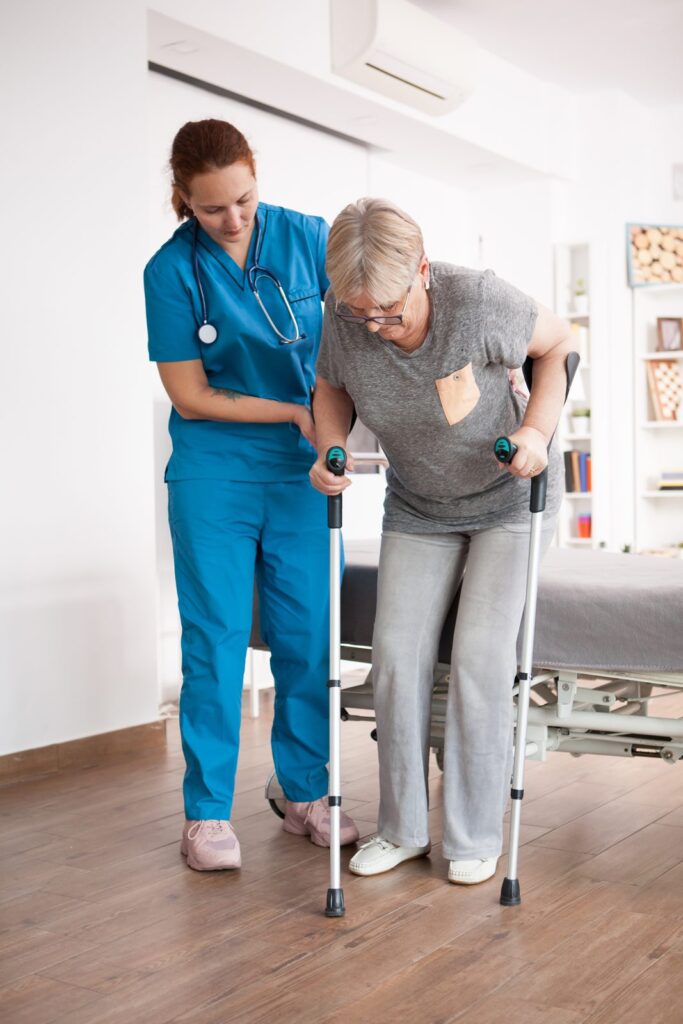
A rehabilitation plan suited to the first month after a stroke may not be suitable after 3 or 6 months. At the beginning, we may focus on sitting, standing and moving the joints. But after a while, the patient needs more precise training in walking, balance, hand use, or movement control. Continuing the same exercises without developing them may make improvement slower.
2. The presence of muscle tension or stiffness
Some stroke patients suffer from increased muscle tension, known as muscle spasticity. The hand may appear clenched, or the leg stiff when walking. This tension may hinder movement and make exercises harder, and if it is not dealt with early, it may cause pain and stiffness and reduce the patient’s ability to use the affected limb.
3. Shoulder pain after a stroke
Shoulder pain is a common problem after a stroke, especially in the weak arm. It may happen because of weakness in the muscles that stabilize the shoulder joint, or from moving the arm incorrectly. If the patient is in pain, they will often use the arm less, and with less use, difficulty increases and improvement decreases.
4. Little use of the weak limb
Sometimes the patient relies on the healthy side for everything, and stops using the weak hand or leg. Over time, the brain and body get used to this pattern. Using the affected limb in a safe and suitable way is very important, because the brain needs repeated training to relearn movement as far as possible.
5. Poor balance and fear of falling
The patient may improve in walking but remain afraid of falling. This fear makes them move less, and with less movement the muscles weaken further, so imbalance increases. And so the patient enters an annoying cycle: fear of movement → less movement → weak muscles → worse balance → greater fear.
6. Poor concentration or slow response after a stroke
A stroke may affect concentration, attention, speed of response, sleep, or mood. If the patient cannot concentrate well during exercises, they may need a broader assessment. In some cases, neurofeedback may be a supportive part of the plan, according to the doctor’s assessment.
When do we need to reassess the rehabilitation plan?
It is preferable to reassess a stroke patient if signs such as these appear:
- Improvement has stopped for a clear period.
- Continued weakness of the hand or leg despite exercises.
- Increased muscle tension or stiffness.
- Pain in the shoulder or joints.
- Difficulty walking or with balance.
- Excessive fear of movement.
- Difficulty using the hand in daily activities.
- Poor concentration or slow response.
- The patient relying entirely on the healthy side.
Reassessment does not mean the previous plan was wrong. But it means the patient’s condition has changed and their needs have become different.
What is the role of magnetic stimulation when improvement stops after a stroke?
In some cases, magnetic stimulation of the brain may be a supportive tool within the neurorehabilitation plan after a stroke. The idea of magnetic stimulation is that it uses focused magnetic pulses to stimulate certain areas of the brain or modulate their activity, with the aim of supporting the nervous system’s response to motor training.
But it is very important to make clear that magnetic stimulation:
- Does not treat the stroke itself.
- Does not replace motor rehabilitation.
- Is not suitable for every patient.
- Is not used in the same way for all cases.
- Must be part of a plan based on a specialist medical assessment.
Magnetic stimulation may be considered when the aim is to support movement, improve the response to training, or help with some walking or hand problems, depending on the patient’s condition and stage of recovery.
What is the difference between ordinary rehabilitation and specialized neurorehabilitation?
Rehabilitation after a stroke does not mean only general exercises. Specialized neurorehabilitation is concerned with how to re-teach the brain and body to move. The patient may need:
- Training to walk in the correct way.
- Improving balance.
- Training the hand to grip and for daily use.
- Reducing muscle tension.
- Treating shoulder pain.
- Improving movement control.
- Training the family to help correctly at home.
- Integrating techniques such as magnetic stimulation or neurofeedback when suitable for the case.
The aim is not only to increase muscle strength, but to improve daily function: for the patient to walk safely, use their hand more, depend less on others, and regain more of their independence.
Can a stroke patient improve after months?
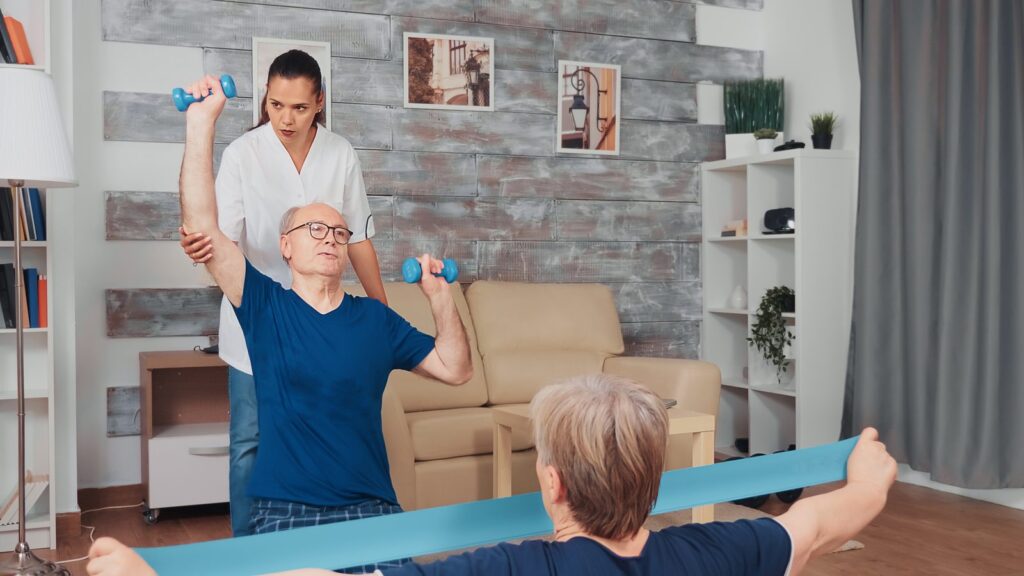
Yes, some patients can continue to improve months after the stroke, but to different degrees depending on the case. Improvement depends on many factors, including: the location of the stroke and how much was affected, when rehabilitation started, how regularly the patient follows the plan, the presence of muscle tension or pain, general health, the patient’s ability to take part in training, and the quality of the rehabilitation plan and its adjustment to the stage.
So the patient should not be judged only because time has passed. What matters most is to assess the remaining abilities, what is hindering improvement, and what plan suits the current stage.
Common mistakes when improvement stops
Among the most common mistakes: stopping rehabilitation completely because improvement is slow, repeating the same exercises without developing them, ignoring shoulder pain or muscle tension, relying only on the healthy limb, doing intense exercises believing they speed up improvement, delaying reassessment, and expecting a quick result from sessions or devices without functional training.
Rehabilitation after a stroke needs patience, but it also needs intelligence in adjusting the plan, not just repetition.
Frequently asked questions about improvement stopping after a stroke
Does improvement stopping mean a stroke patient will never improve again? Not necessarily. It may mean the patient needs a reassessment and a change of rehabilitation plan according to the current stage.
Why does the leg sometimes improve before the hand after a stroke? Hand movement needs very precise control from the brain, and sensation and coordination between many small muscles. So returning to hand use may be harder and need more specialized training.
Does magnetic stimulation help if improvement stops? It may help some cases as a supportive tool within the neurorehabilitation program, but the decision depends on the doctor’s assessment.
Is neurofeedback useful after a stroke? It may be useful in some cases that suffer from poor concentration, slow response, tension, or sleep disturbance after a stroke, but it does not suit all cases.
Should the rehabilitation plan be changed after a while? Yes, a stroke patient often needs the plan adjusted according to their progress.
The role of Dr. Shereen Fawaz's clinic
At Dr. Shereen Fawaz’s clinic, stroke patients are handled through a careful assessment of movement, nerves, muscles, joints, balance, hand use, and concentration.
A suitable rehabilitation plan is set for each patient according to the stage of recovery, and the plan may be adjusted when improvement is slow or problems appear such as muscle tension, shoulder pain, weak hand, walking disorder, or poor concentration.
The plan may include means such as magnetic stimulation or neurofeedback when suitable for the case, within an integrated neurological and motor rehabilitation program.
Dr. Shereen Fawaz has expertise in physical medicine, rheumatology and rehabilitation, and in the rehabilitation of neurological and movement disorders, with particular experience in magnetic stimulation. She is one of the pioneers of magnetic stimulation in Egypt and the founder of the first center in Egypt specializing in magnetic stimulation and rehabilitation.
Conclusion
Improvement stopping or slowing after a stroke does not always mean the recovery journey is over. Sometimes the patient needs a reassessment, an adjusted plan, treatment of tension or pain, more specialized training for the hand or walking, or the use of supportive means such as magnetic stimulation or neurofeedback in some cases.
The most important thing is not to give in to the idea that “improvement has stopped”, but to look for the cause and decide the next step scientifically.
If a stroke patient improved at first and then stopped, or still suffers from weakness, muscle tension, pain, imbalance, or difficulty concentrating, reassessment may be an important step to open a new path to improvement.
To book or enquire:
📲 01030020829
📲 0224153602
📍 6 Kolleyet El Banat Project, behind Air Defense House, Nasr City, Cairo, Egypt
- All Posts
- Uncategorized
The Role of Magnetic Stimulation in Stroke Rehabilitation: When It...

Hand Numbness While Sleeping: Is It a Pinched Nerve or...
Why Does a Stroke Patient’s Improvement Stop After a While,...
Book a specialist assessment
If you or a family member has weak movement, difficulty walking, muscle stiffness, or slow improvement after a stroke or nerve injury, you can book a specialist assessment with Dr. Shereen Fawaz to find out whether magnetic stimulation is suitable for the case, and to set a rehabilitation plan based on the medical and functional assessment.