
The Role of Magnetic Stimulation in Stroke Rehabilitation: When It Helps and When It Is Not Suitable
Does magnetic stimulation treat stroke?
After a stroke, the patient and family begin a journey full of questions: will movement improve? Can the weak hand or leg respond again? And can magnetic stimulation help with rehabilitation?
The important answer is that magnetic stimulation does not treat the stroke itself, does not dissolve the clot, and does not replace brain and nerve medication or essential medical follow-up.
But in some cases, after the condition has stabilized medically, magnetic stimulation of the brain may be a supportive tool within the neurorehabilitation program, aiming to support the response of the brain and nervous system to movement training.
Put more simply: magnetic stimulation is not a substitute for rehabilitation, but it may help some patients benefit better from the rehabilitation plan, when it is chosen properly and after a specialist assessment.
What happens in the brain after a stroke?
A stroke occurs when blood supply to part of the brain is reduced or stops, so that part is affected to varying degrees. If the affected part is responsible for movement, symptoms may appear such as:
- Weakness in the arm or leg.
- Difficulty walking.
- Poor hand use.
- Poor balance.
- Muscle tension or stiffness.
- Slowness in responding to movement.
- Difficulty performing daily activities.
But the brain is not completely fixed. It has an ability called neuroplasticity: the brain’s ability to reorganize some neural pathways and learn new ways of moving after injury.
This ability is the foundation on which neurorehabilitation after stroke depends. The more organized, repeated and suited to the patient’s condition the training is, the greater the chance of helping the brain and body regain part of motor function, depending on the degree of injury and the response of the case.
What is magnetic stimulation of the brain?
Magnetic stimulation of the brain is a medical technique that uses focused magnetic pulses to stimulate certain areas of the brain or modulate their activity in a measured way.
In rehabilitation after stroke, a type called repetitive magnetic stimulation, or rTMS, may be used, which relies on repeating magnetic pulses according to a specific protocol chosen by the doctor according to the case.
The idea is not that the device “restores movement by itself”, but that it helps prepare the nervous system to respond better to motor rehabilitation.
For this reason, the best benefit is often when magnetic stimulation is combined with:
- Neurological physical therapy.
- Walking and balance training.
- Hand use training.
- Motor control exercises.
- Functional rehabilitation for daily activities.
- Following the progress of the case and adjusting the plan according to response.
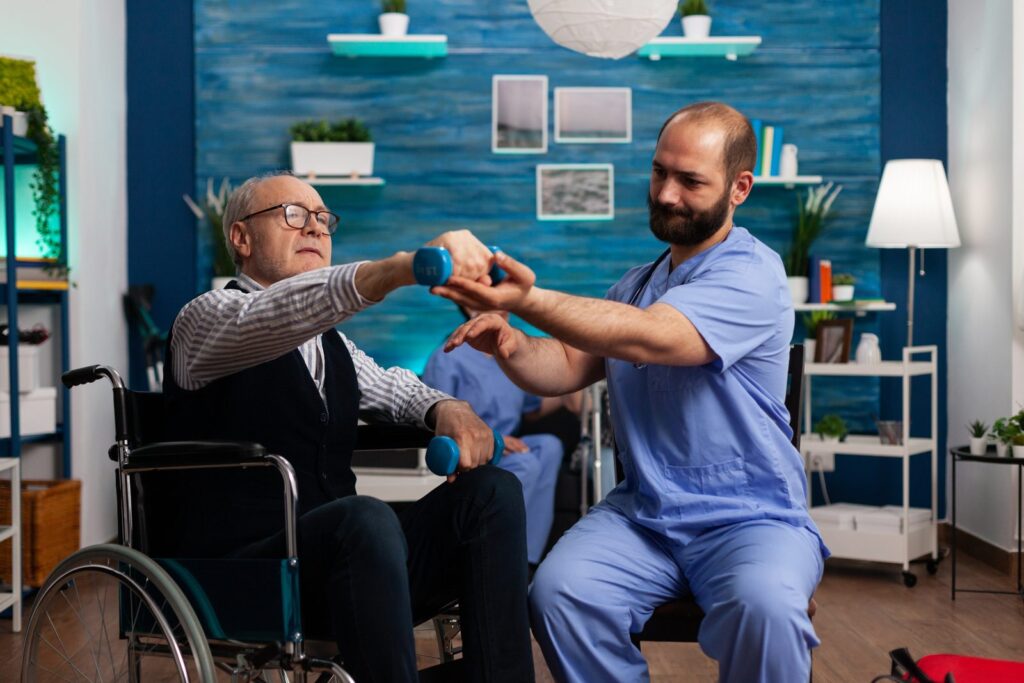
How might magnetic stimulation help after a stroke?
Magnetic stimulation may help some stroke patients, as part of an integrated rehabilitation program, with several goals, depending on the assessment of each case.
1. Supporting the recovery of movement
After a stroke, the signals between the brain and muscles may become weaker or less organized. In some cases, magnetic stimulation may help activate or organize certain areas linked to movement, which may support the patient’s response to therapeutic exercises.
2. Improving use of the weak hand or leg
Many stroke patients suffer from marked weakness in the hand or leg. The problem may not be only in the muscles, but in the neural control of movement. When magnetic stimulation is combined with rehabilitation, it may help some patients gradually improve control of the weak limb.
3. Supporting walking and balance training
Some patients after a stroke can stand or walk, but with unsteady steps, or with a fear of falling. In these cases, magnetic stimulation may be part of a larger plan that includes balance training, muscle strengthening and improving the walking pattern.
4. Helping in some cases of muscle spasticity
After a stroke, some patients suffer from increased muscle tension or spasm. Magnetic stimulation may be a supportive tool in some cases, but dealing with spasticity needs a careful assessment.
Is magnetic stimulation suitable for all stroke patients?
No. And this is a very important point. Not every stroke patient needs magnetic stimulation, and not all weakness after a stroke responds in the same way.
The decision to use magnetic stimulation depends on several factors, including:
- The location of the stroke in the brain.
- How long ago the injury occurred.
- The degree of motor weakness.
- The presence of muscle tension or stiffness.
- The patient’s level of awareness and concentration.
- The patient’s ability to take part in rehabilitation.
- General health.
- The presence of contraindications or precautions for using magnetic stimulation.
- The treatment goal required: the hand, walking, balance, motor control, or others.
So a patient should not start magnetic stimulation sessions just because they heard about them or because another patient benefited from them. A specialist assessment is what determines whether the technique is suitable, and which protocol is best.
When is magnetic stimulation unsuitable or in need of caution?
There are cases that need great caution, or for which magnetic stimulation may not be suitable, such as some patients with a particular history of seizures or epilepsy, the presence of certain metal devices or plates near the head, or some implanted devices such as pacemakers.
Some medically unstable cases after a stroke also need to stabilize first and be followed up with the treating medical team before starting any advanced rehabilitation program.
So magnetic stimulation must be used under specialist medical supervision, and not as general sessions offered to all patients in the same way.
Why is magnetic stimulation alone not enough?
Because a stroke does not affect only the “brain signal”; it affects the patient’s whole life. The patient may suffer muscle weakness, joint stiffness, shoulder pain, balance disorders, fear of falling, difficulty using the hand, or excessive reliance on the healthy limb.
If magnetic stimulation is used without suitable motor training, the benefit may be limited. It is best that it be part of a rehabilitation plan with clear goals, such as:
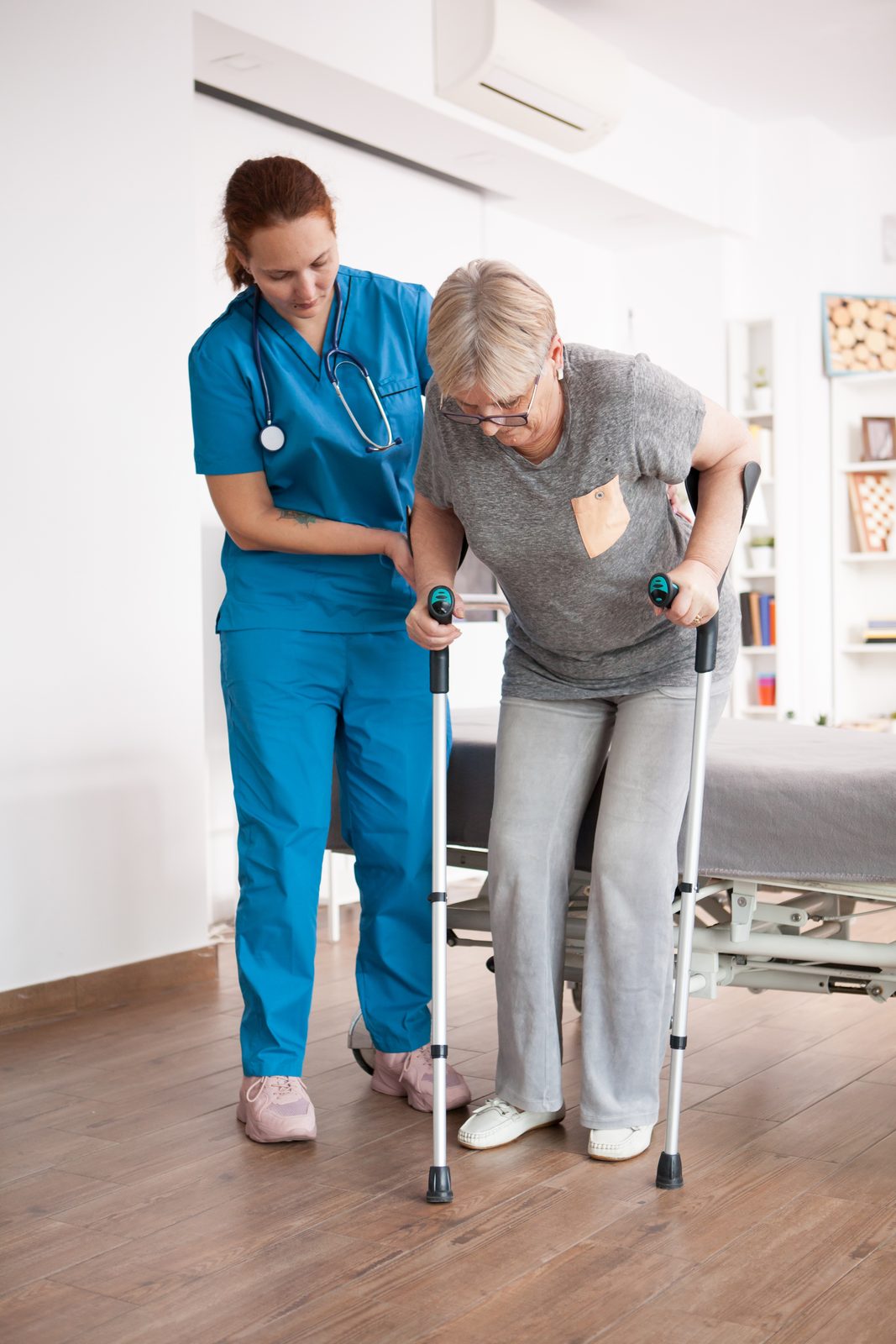
- Training the patient to stand up and sit down.
- Improving walking.
- Strengthening weak muscles.
- Reducing stiffness.
- Training the hand to grip and for daily use.
- Improving balance.
- Teaching the family how to help the patient at home.
- Following progress and adjusting the plan when needed.
Rehabilitation after a stroke is not “a device session”, but a complete program for relearning movement as far as possible.
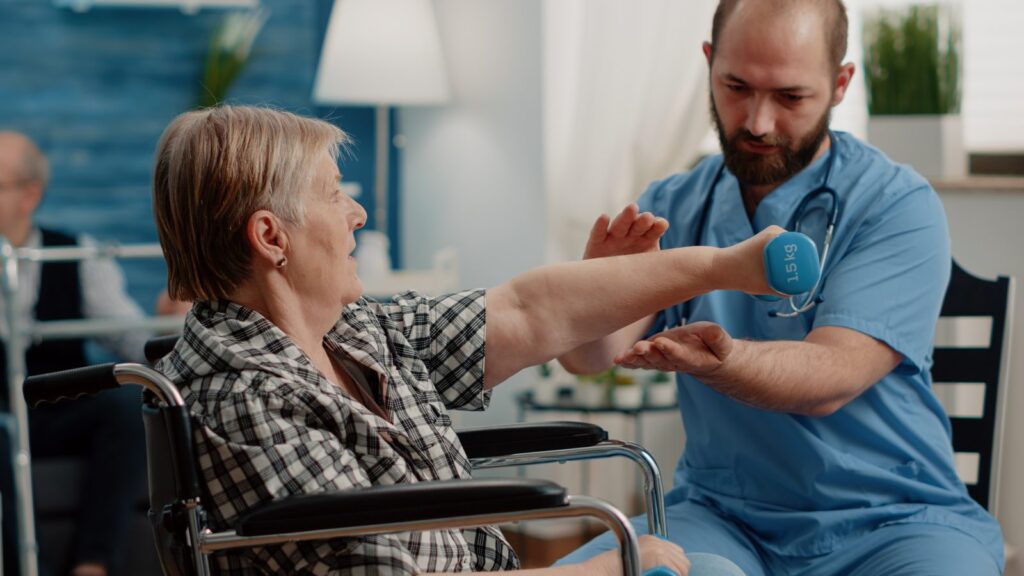
When does rehabilitation of a stroke patient begin?
In most cases, the earlier rehabilitation begins, and safely, the better for reducing complications and improving the chances of recovery. But “early” does not mean rushing or exhausting the patient.
A proper start depends on medical stability and the doctor’s assessment of what the patient can safely begin with. The plan may start with simple steps such as:
- Changing body positions.
- Protecting the shoulder and the weak arm.
- Gently moving the joints.
- Sitting and standing training.
- Preventing stiffness.
- Then moving gradually to walking, balance and hand training.
After that, the doctor can decide whether the patient needs additional means such as magnetic stimulation, neurostimulation, or more specialized rehabilitation programs.
Frequently asked questions about magnetic stimulation after a stroke
Does magnetic stimulation bring movement back after a stroke? It may help some patients improve their response to motor rehabilitation, but it does not guarantee full return of movement, and it does not work alone.
Is magnetic stimulation a substitute for physical therapy? No. It is best used, when suitable for the case, as a supportive tool within an integrated rehabilitation plan.
Are magnetic stimulation sessions painful? Mostly not. The patient may feel pulses or a light sensation in the targeted area.
When do the results of magnetic stimulation appear after a stroke? The response varies from patient to patient. Some patients need several sessions with a regular rehabilitation program before noticing improvement.
Is magnetic stimulation suitable for every stroke patient? No. The case must be assessed first to determine how suitable magnetic stimulation is, and to choose the right protocol.
The role of Dr. Shereen Fawaz's clinic in rehabilitating a stroke patient
At Dr. Shereen Fawaz’s clinic, stroke cases and weak movement are handled through a careful assessment of movement, nerves, muscles, joints, balance and hand use.
A suitable rehabilitation plan is set for each patient according to the stage of recovery, the degree of weakness and daily goals, and the plan may include magnetic stimulation when suitable for the case.
Dr. Shereen Fawaz has expertise in physical medicine, rheumatology and rehabilitation, and in the rehabilitation of neurological and movement disorders, with particular experience in magnetic stimulation. She is one of the pioneers of magnetic stimulation in Egypt and the founder of the first center in Egypt specializing in magnetic stimulation and rehabilitation.
The aim is not to give the same treatment to all patients, but to choose the right plan for each case based on an accurate diagnosis and continuous follow-up.
Conclusion
Magnetic stimulation does not treat the stroke itself, but it may be an important supportive tool in the rehabilitation of some stroke patients, when used at the right time, with the right protocol, and within an integrated neurorehabilitation plan.
The best results do not come from a device alone, but from a proper assessment, regular rehabilitation, suitable motor training, and careful follow-up of the patient’s response.
If a stroke patient suffers from weakness in the hand or leg, difficulty walking, poor balance, muscle stiffness, or poor use of the affected limb, a specialist assessment may help determine the most suitable plan for their case.
To book or enquire:
📲 01030020829
📲 0224153602
📍 6 Kolleyet El Banat Project, behind Air Defense House, Nasr City, Cairo, Egypt
- All Posts
- Uncategorized
The Role of Magnetic Stimulation in Stroke Rehabilitation: When It...
Hand Numbness While Sleeping: Is It a Pinched Nerve or...
Why Does a Stroke Patient’s Improvement Stop After a While,...
Book a specialist assessment
If you or a family member has weak movement, difficulty walking, muscle stiffness, or slow improvement after a stroke or nerve injury, you can book a specialist assessment with Dr. Shereen Fawaz to find out whether magnetic stimulation is suitable for the case, and to set a rehabilitation plan based on the medical and functional assessment.