
Poor Concentration After a Stroke: Is It Normal, and What Is the Role of Rehabilitation and Neurofeedback?
Does a stroke affect concentration and memory?
After a stroke, most people focus on movement: can the patient walk? Does the hand move? Is there weakness in the arm or leg?
But sometimes the family notices something else that is no less important. The patient forgets more than before. Needs more time to answer a question. Gets distracted quickly. Loses concentration during conversation or exercises. Sleeps irregularly. Or becomes more nervous and anxious than usual.
And here an important question appears: is poor concentration after a stroke normal? Or a sign that needs assessment?
The truth is that a stroke may affect concentration, attention, memory and speed of thinking, especially if areas of the brain responsible for cognitive functions or for regulating attention and mood were affected. This does not mean the patient “is not trying”, and it does not mean the problem is only psychological. It may be part of the effect of the stroke on the brain and nervous system.
Why does poor concentration happen after a stroke?
The brain works as an integrated network. There are areas responsible for movement, others for speech, others for attention, memory, regulating emotions, and speed of response. When a stroke happens, part of this network may be affected.
Even if the main problem appears in movement, other symptoms may exist such as:
- Slow thinking.
- Poor attention.
- Difficulty following long speech.
- Forgetting instructions.
- Distraction during exercises.
- Changes in sleep.
- Anxiety or depression after the stroke.
- Difficulty organizing daily tasks.
In some cases, poor concentration is due to combined factors, not the stroke alone, such as lack of sleep, pain, fear, medications, lack of movement, or frustration after the illness. So the patient needs a comprehensive assessment, not a focus on muscles and movement only.
Does poor concentration affect motor rehabilitation?
Yes, and clearly. Rehabilitation after a stroke does not depend only on moving the hand or leg. It depends on relearning movement, paying attention to instructions, and repeating training in the right way.
If the patient is distracted or slow to respond, they may find it hard to follow exercise instructions, remember the correct way to move, concentrate during walking training, use the weak hand in daily activities, keep their balance while moving, or respond quickly to avoid falling.
So poor concentration after a stroke may also slow motor improvement, because it reduces the patient’s ability to take an active part in the rehabilitation program. Here the importance of integrated neurorehabilitation appears, which does not look at movement alone, but assesses movement, concentration, balance, sleep, psychological state, and the patient’s ability to learn and train.
When is poor concentration after a stroke a sign that needs assessment?
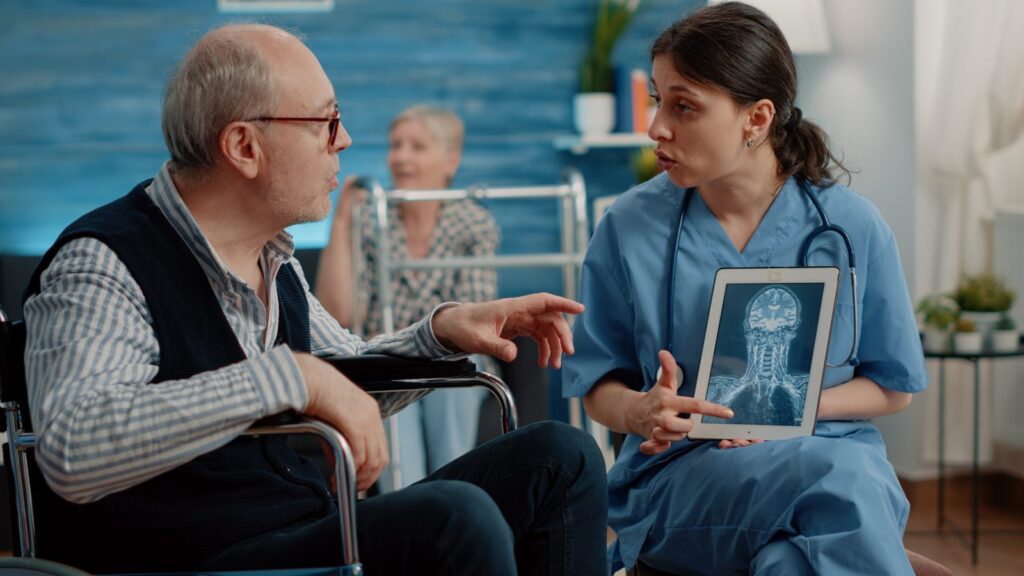
It is preferable to ask for a specialist assessment if the family notices that the patient:
- Repeatedly forgets instructions.
- Cannot concentrate during conversation or exercises.
- Has become very slow in answering or thinking.
- Gets distracted quickly.
- Sleeps a lot or has a sleep disturbance.
- Has become more nervous, anxious or sad.
- Forgets to use the weak limb.
- Finds it difficult to do tasks they knew before.
- Is not improving in rehabilitation despite apparent commitment.
Assessment here does not necessarily mean the condition is serious. But it helps understand whether the problem is due to the effect of the stroke, a sleep disturbance, pain, stress, or other factors that need to be dealt with.
What is the role of cognitive rehabilitation after a stroke?
Cognitive rehabilitation is part of neurorehabilitation, and is concerned with improving the mental functions that help the patient in daily life, such as attention, memory, speed of response, and organizing tasks.
Cognitive rehabilitation may include simple, graded exercises that help the patient improve attention during activities, remember daily instructions, organize the steps of movement, concentrate during walking training or hand use, reduce distraction, and improve the ability to take part in rehabilitation.
The aim is not just a “memory exercise”, but to help the patient use their concentration and attention in practical situations, such as walking safely, getting dressed, eating, or using the weak limb better.
What is neurofeedback, and does it have a role after a stroke?
Neurofeedback is a training method that relies on monitoring brain activity in a painless way, then helping the patient learn to regulate some patterns of this activity better through dedicated sessions.
In simple terms: neurofeedback does not “force” the brain to work in a certain way, but helps it train gradually to regulate attention and response, according to the specific treatment goal.
In some cases after a stroke, neurofeedback may be a supportive part of the plan, especially if the patient suffers from poor concentration, slow response, distraction, excessive tension, sleep disturbance, or difficulty with mental participation during rehabilitation.
But it is very important to make clear that neurofeedback does not suit all patients, and is not used as a substitute for motor rehabilitation or medical follow-up. It is a supportive means that may be part of a broader plan, after a careful assessment of the patient’s condition and the rehabilitation goals.
Can neurofeedback be combined with magnetic stimulation?
In some cases, combining more than one rehabilitation means may be considered, such as motor rehabilitation, neurofeedback and magnetic stimulation, but this is not done randomly.
Magnetic stimulation of the brain may be used in some post-stroke cases with the aim of supporting the nervous system’s response to motor training, while neurofeedback may help in some cases that need support for attention, concentration, or regulating the neural response.
But the choice depends on the location and effect of the stroke, the degree of motor weakness, the state of concentration and attention, the presence of sleep disturbance or tension, the patient’s ability to take part in training, and the treatment goals required. So the patient does not need “sessions” only, but a clear plan based on a comprehensive assessment.
Does poor concentration after a stroke improve?
Poor concentration after a stroke may improve to different degrees, depending on the cause of the problem and how severely it is affected, and the presence of other factors such as sleep, pain, anxiety, medications, or general health.
Some patients improve with time and regular rehabilitation. Others need more specialized intervention that includes cognitive training, regulating sleep, treating pain, supporting the psychological state, or supportive means such as neurofeedback when suitable.
What matters is not to ignore the problem or explain it as “laziness” or “the patient not wanting to”. Many stroke patients need patience, encouragement, and a plan that helps them gradually regain confidence and the ability to take part.

Common mistakes when dealing with poor concentration after a stroke
A common mistake is to overwhelm the patient with many instructions at once. It is better for instructions to be simple, clear and repeated.
Another mistake is to regard slow response as stubbornness or lack of cooperation. In many cases, the brain needs more time to process information after a stroke.
Likewise, ignoring sleep disturbance, pain or anxiety may make concentration worse and reduce the patient’s benefit from rehabilitation. And the most important mistake is to focus on hand and leg movement only, forgetting that concentration and attention are an essential part of rehabilitation success.
How can the family help a stroke patient concentrate?
The family’s role is very important in the recovery journey. Some simple steps may help the patient, such as:
- Giving short, clear instructions.
- Reducing noise during exercises or conversation.
- Not rushing the patient to answer.
- Encouraging them without excessive pressure.
- Regulating sleep times.
- Dividing daily tasks into simple steps.
- Repeating training calmly.
- Following any change in mood or attention.
The aim is for the patient to feel safe, not as if they are under constant testing.
Frequently asked questions about poor concentration after a stroke
Is poor concentration after a stroke normal? Poor concentration may occur after a stroke in some patients, especially if areas responsible for attention, memory or speed of response were affected. But it needs assessment if it is marked or affects rehabilitation and daily life.
Do memory problems after a stroke improve? They may improve to different degrees depending on the case, and cognitive rehabilitation, regulating sleep, and reducing pain and stress help support improvement in some patients.
Does neurofeedback treat poor concentration after a stroke? It may be a supportive means in some cases to improve regulation of attention and response, but it does not suit all patients and does not replace neurorehabilitation or medical follow-up.
Does poor concentration delay the improvement of movement? Yes, poor concentration may affect the patient’s ability to carry out exercises, learn movement and take part in rehabilitation.
When should I visit a rehabilitation doctor? If a stroke patient suffers from poor concentration, slow response, distraction, sleep disturbance, mood change, or difficulty taking part in rehabilitation, it is best to have a specialist assessment.
The role of Dr. Shereen Fawaz's clinic
At Dr. Shereen Fawaz’s clinic, the stroke patient is assessed comprehensively, not only in terms of movement, but also concentration, attention, balance, hand use, muscles, nerves, and daily functional state.
A suitable rehabilitation plan is set for each patient according to their condition and stage of recovery, and may include motor rehabilitation, cognitive rehabilitation, magnetic stimulation, or neurofeedback when these means suit the case.
Dr. Shereen Fawaz has expertise in physical medicine, rheumatology and rehabilitation, and in the rehabilitation of neurological and movement disorders, with particular experience in magnetic stimulation and modern rehabilitation means. She is one of the pioneers of magnetic stimulation in Egypt and the founder of the first center in Egypt specializing in magnetic stimulation and rehabilitation.
The aim is to set a realistic plan that helps the patient improve movement and concentration, take part in rehabilitation, and return to their daily activities as best as possible according to their condition.
Conclusion
Poor concentration after a stroke is an important symptom that should not be ignored. It may affect exercises, walking, hand use, balance, and the ability to learn during rehabilitation.
Treatment is not by focusing on movement only, but needs a comprehensive assessment of the brain and nervous system, including movement, attention, sleep, mood, and the patient’s response to training.
In some cases, neurofeedback or magnetic stimulation may be a supportive part of the rehabilitation plan, but after a specialist medical assessment, and not as a general solution for all patients.
If a stroke patient suffers from poor concentration, slow thinking, distraction, sleep disturbance, or difficulty taking part in rehabilitation, early assessment may be an important step to determine the right plan.
To book or enquire:
📲 01030020829
📲 0224153602
📍 6 Kolleyet El Banat Project, behind Air Defense House, Nasr City, Cairo, Egypt
- All Posts
- Uncategorized
The Role of Magnetic Stimulation in Stroke Rehabilitation: When It...
Hand Numbness While Sleeping: Is It a Pinched Nerve or...
Why Does a Stroke Patient’s Improvement Stop After a While,...
Book a specialist assessment
If you or a family member has weak movement, difficulty walking, muscle stiffness, or slow improvement after a stroke or nerve injury, you can book a specialist assessment with Dr. Shereen Fawaz to find out whether magnetic stimulation is suitable for the case, and to set a rehabilitation plan based on the medical and functional assessment.