
Magnetic Stimulation for Depression: How It Works and What Happens During a Session
After trying more than one treatment approach, a patient with depression may hear for the first time about transcranial magnetic stimulation (TMS). And here the questions begin: is it suitable for every patient with depression? Is the session painful? Do I have to stop my medication? And when might the patient feel better?
These questions are natural, but the answer does not begin with the device; it begins with diagnosing the case, reviewing previous treatments, and understanding the aim of using the technique.
Magnetic stimulation may be a useful option for some patients, but it is not suitable for all cases, and it does not give the same result to every person.
What is TMS magnetic stimulation?
Transcranial magnetic stimulation, or TMS – Transcranial Magnetic Stimulation, is a non-invasive procedure that uses an electromagnetic coil placed near the scalp.
The coil produces repeated magnetic pulses that stimulate nerve cells and circuits within a specific area of the brain. In treating depression, some protocols target areas of the front of the brain linked to mood regulation and cognitive control.
TMS does not usually require general anesthesia, and the patient stays awake and able to communicate during the session. It can also be done in the clinic without a hospital stay.
To learn the difference between it and electroconvulsive therapy, you can read: The difference between TMS and ECT electric shock sessions.
When might a doctor consider TMS for treating depression?
Magnetic stimulation is not used automatically for everyone who feels sad or stressed, and not improving after a few days of taking a medication does not mean the patient needs the device.
A doctor may consider TMS in selected cases of depression, especially when the patient has not achieved enough improvement with appropriate treatment attempts, or when they find it hard to tolerate some medications.
Before making the decision, several points should be reviewed, including:
- Is the diagnosis of depression clear and accurate?
- How severe are the symptoms and how do they affect sleep, work and daily life?
- Which medications has the patient used?
- Were they used at appropriate doses and for appropriate durations?
- Was psychotherapy tried when it was appropriate?
- Are there other accompanying symptoms or disorders?
- Is there a health problem or medication that might affect the safety of the sessions?
- Are there thoughts of self-harm, or a condition that needs faster intervention?
The usual treatment for depression relies on psychotherapy and antidepressant medication, while moving to other options depends on the severity of the case, its response, and the patient’s individual factors.
Does one medication not working mean you need TMS?
Not necessarily.
A patient may not improve because the medication is unsuitable, because it was not used for long enough, because side effects prevent reaching the required dose, or because the diagnosis needs reviewing.
What is needed may also be adding psychotherapy, treating a sleep disorder, or reviewing another health condition that affects the symptoms.
So TMS should not be presented as an automatic step after trying one medication. The decision depends on assessing the whole treatment history, not just the number of medications.
What happens before TMS sessions begin?
Before the sessions, the medical team needs to assess the case and confirm how suitable the technique is.
The assessment usually includes:
- Reviewing the symptoms and diagnosing the condition.
- Knowing the medications and supplements being used.
- Asking about a history of epilepsy or seizures.
- Reviewing previous head injuries or neurological diseases.
- Asking about implanted electronic devices or metal parts.
- Assessing any factors that may affect the likelihood of seizures.
- Explaining the expected benefits, side effects and treatment alternatives.
A history of seizures, head injuries, neurological diseases, or use of medications that may lower the seizure threshold does not always mean TMS is prohibited, but it requires a more careful assessment and a review of safety factors.
Some electronic devices or metal implanted near the head may also prevent use of the device, depending on their type and location and the specifications of the TMS device used. So the doctor must be told about any metal implant or medical device, even when the patient does not think it is related to the treatment.
What happens during a magnetic stimulation session?
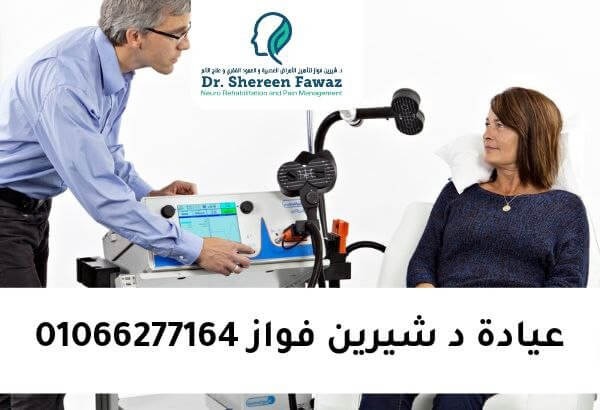
The patient sits on a special chair, then the magnetic coil is placed near the specific area of the head.
When the device is switched on, short, repeated magnetic pulses are produced. The patient usually hears clicking sounds, and may feel a light tapping or knocking on the scalp.
The patient stays awake during the session and can talk to the team and report any pain or discomfort.
The session does not usually need anesthesia or sleep-inducing medication, because the stimulation is directed at a specific area and is not intended to cause a therapeutic seizure.
An appropriate means of hearing protection must also be used during the session, according to the device instructions and safety protocols.
Is a TMS session painful?
There is no single experience that applies to all patients.
Some people only feel the tapping on the scalp, while others feel discomfort or mild pain at the coil site, especially in the first sessions.
Symptoms that may appear during or after the session include:
- Discomfort at the stimulation site.
- Mild headache.
- Tingling or sensation in the scalp.
- Slight contraction or movement of the face or jaw muscles.
- Dizziness or a temporary feeling of light-headedness.
Most common effects are mild and short-lived when safety standards are followed, but the patient should not put up with severe pain or persistent symptoms without telling the treating team.
The team may be able to adjust the coil position or some session settings according to the medical protocol if the patient feels unbearable discomfort.
What are the possible side effects of magnetic stimulation?
The most common effects include headache, scalp discomfort, and temporary movement or tingling in the face or jaw muscles. Some patients may experience dizziness.
Seizures are a known but rare risk, which is why risk factors, medications and neurological history are reviewed before treatment begins.
It is also important to monitor the psychological state throughout the treatment. If the patient notices a clear increase in depression, thoughts of self-harm, or unusual behavioral changes, the doctor must be told immediately. Device guidelines recommend monitoring for clinical worsening or suicidal thoughts during treatment, and reassessing whether to continue sessions if worsening persists.
TMS should not be described as having “no side effects”, even if its possible effects in many patients are limited and short-lived.
How long does a TMS session take?
The length of the session varies according to the type of device and the protocol used.
Information published by the National Institute of Mental Health indicates that a session may take roughly 3 to 40 minutes depending on the type of protocol, while NICE guidance describes conventional sessions as taking about 30 minutes in many programs.
So the length of a session cannot be determined from the name TMS alone; there are different protocols, devices and settings.
How many TMS sessions are needed to treat depression?
Magnetic stimulation is not usually a single session, but a program made up of repeated sessions.
A conventional program may include daily sessions on working days for several weeks. Medical sources indicate that some programs last from two to six weeks, while other common programs consist of five sessions a week for four to six weeks.
But the actual number of sessions depends on:
- The type of device.
- The protocol used.
- The diagnosis.
- The severity of symptoms.
- The patient’s response.
- The follow-up plan.
- Whether follow-up or maintenance sessions are needed.
A fixed number that suits all patients should not be advertised before the assessment.
When does the patient start to feel better?
The patient may not notice a clear change after the first session or the first several sessions, because the therapeutic effect usually needs repeated treatment over a period of time.
The speed and degree of response also vary from one patient to another. Some patients may achieve marked improvement, others reach partial improvement, and some may not get the expected benefit.
NICE guidance stresses that the evidence supports the short-term effectiveness of TMS, but the clinical response varies, and the patient must understand before starting that the procedure may not benefit them.
So improvement is followed using symptom assessment and the ability to carry out daily activities, and not only the general question: “Do I feel better or not?”
Can antidepressant medication be stopped when starting TMS?
Antidepressant medication should not be stopped or its dose reduced without going back to the doctor responsible for it.
TMS may be used within a plan that includes medication or psychotherapy, and there is as yet no single confirmed model that suits all cases regarding the best way to combine these treatments.
So starting the sessions does not mean the medication is no longer necessary, and improvement does not justify stopping it suddenly.
Are TMS results guaranteed?
No.
Magnetic stimulation may help reduce depression symptoms in some patients, but it does not guarantee the same result for everyone.
Improvement is affected by several factors, including:
- The accuracy of the diagnosis.
- The severity and duration of the depression.
- Previous treatments.
- The presence of other accompanying disorders.
- The type of protocol.
- Regular attendance at sessions.
- Accompanying treatment follow-up.
So realistic expectations must be discussed before treatment, the response assessed during the program, and the plan adjusted when needed.
Frequently asked questions about TMS for depression
Is TMS suitable for anxiety and stress? Not every feeling of anxiety or stress should be considered a reason to use TMS. It must first be determined whether the anxiety is a temporary symptom, part of the depression, or a separate disorder that needs a different plan.
Does the patient need to be admitted to hospital? TMS sessions can usually be done on an outpatient basis, and the patient does not normally need a hospital stay or general anesthesia.
Can I return to activities after the session? Because the session does not usually need anesthesia, many patients can return to their activities when it ends, but the treating team’s instructions must be followed and any dizziness, headache or symptoms that appeared after the session must be taken into account.
Is TMS the same as electric shock sessions? No. TMS uses a magnetic field to stimulate a specific area of the brain, while ECT uses an electric current to induce a controlled therapeutic seizure under anesthesia. You can read the detailed comparison in our article on the difference between TMS and ECT.
Don't start from the device... start from the assessment
The most important question is not: how many TMS sessions do I need?
It is: do my diagnosis, my condition and my treatment history make TMS a suitable option for me?
You can book with Dr. Shereen Fawaz for a medical assessment, a review of previous treatment attempts, and to find out whether TMS magnetic stimulation can be a suitable part of your treatment plan, coordinating with the treating psychiatrist when needed.
To book or enquire:
📲 01030020829
📲 0224153602
📍 6 Kolleyet El Banat Project, behind Air Defense House, Nasr City, Cairo, Egypt
Related posts
- All Posts
- Uncategorized





Book a specialist assessment
If you or a family member has weak movement, difficulty walking, muscle stiffness, or slow improvement after a stroke or nerve injury, you can book a specialist assessment with Dr. Shereen Fawaz to find out whether magnetic stimulation is suitable for the case, and to set a rehabilitation plan based on the medical and functional assessment.